

Thank you, to Chairman Guliyev, and to the OSCE, for the invitation to address this distinguished assembly.
We have been promised a debate about geoeconomics, and so I’m certain a debate is what we will have.
I want to speak with you today about a specific transformation that will reshape the global economy as profoundly as electrification or the internet—and about why the transatlantic relationship will either define this transformation, or be defined by it.
We are living through what I call the “Inference Revolution,” with respect to the development of artificial intelligence. Just as cloud computing became the invisible backbone of the internet and digital life as we know it, inference computing is becoming the substrate of AI services around the world. Every real-time translation, document synthesis, and scientific simulation made by AI systems will depend on access to distributed, reliable computational power operating at a scale we are now only just beginning to comprehend.
The scale of American investment should speak for itself. U.S. technology and AI companies are projected to spend more than $400 billion on data center infrastructure over the next several years. To put that in perspective, U.S. data centers alone are projected to exceed the energy consumption of all of Japan by 2030. Such massive investment will rewire the global economy for the next half-century, impacting every nation and every constituency represented in this assembly.
Europe is not a passenger in this transformation. But Europe’s role is also not what many of you might think.
The AI stack has six critical layers. We should be direct about where Europe stands in each. In terms of critical minerals extraction and processing, Europe produces essentially nothing and depends almost entirely on China. For high-bandwidth memory and advanced chip packaging, Europe has no major champions. For fabrication of logic chips, Europe has manufacturing capability, but only at mature nodes—not at the bleeding-edge, where competition between the United States and China is most intense.
But at the two layers that determine whether AI infrastructure can actually function at scale—energy systems and connectivity—Europe does not just participate in the global AI economy; it is an irreplaceable fixture within it.
In terms of energy: American hyperscalers looking to build gigawatt-scale data centers depend on European engineering for the power distribution networks that make computation possible. These are the turbines, transformers, and switchgear sold by companies like Siemens, ABB, and Schneider Electric.
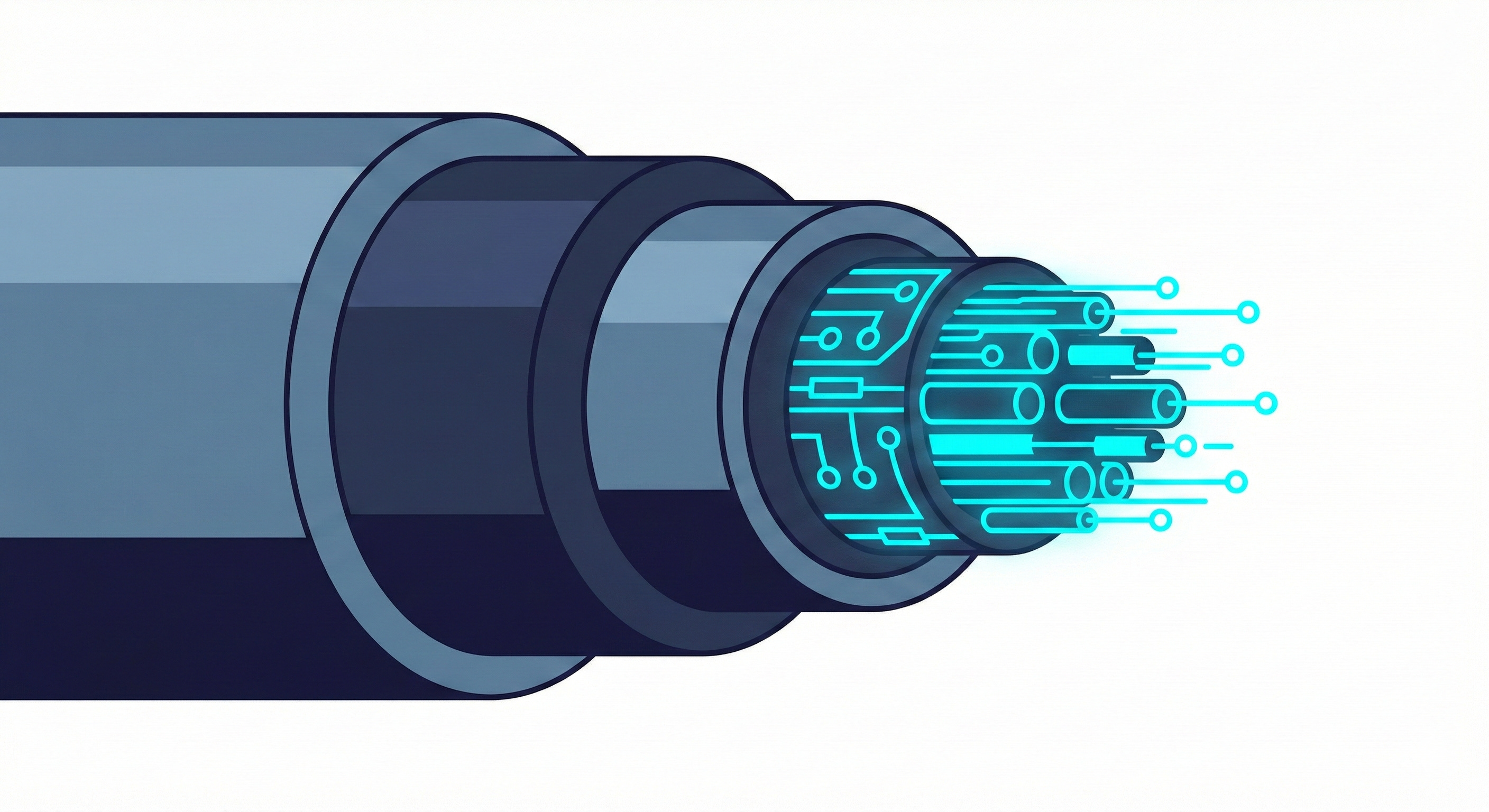
In terms of connectivity: Companies like Prysmian, Nexans, and NKT account for 65 percent of the global submarine cable market. Every connection between data centers, and every undersea link carrying traffic between continents, depends on European cable manufacturing and installation expertise that cannot be quickly replicated elsewhere.
This is the essential reckoning of the AI age—one we can choose to embrace, or ignore at our peril: American capital needs European infrastructure. There is no path to AI leadership that runs around Europe. There is only a path that runs through it.
In my view, Europe’s greatest strategic error would be pursuing comprehensive “digital sovereignty”—trying to replicate the entire AI stack domestically. This would be economically unviable and strategically counterproductive. But Europe should pursue “selective sovereignty”—by identifying the two or three layers of the AI stack where it has natural advantages, and making itself absolutely essential within them.
Deepening European dominance in energy infrastructure and connectivity would help rebuild a transatlantic tech partnership with the United States, while providing Europe with disproportionate influence in global technology governance. In this way, Europe may even succeed in reestablishing the “Brussels Effect”—not through regulatory constraint, but by becoming an indispensable partner in building a shared future for AI and digital services.
But there is an uncomfortable reality that this assembly must face:
Europe is treating its selective advantages in AI as permanent, rather than perishable. Some in this assembly and in national parliaments are pushing to build European alternatives across the entire technology stack—rather than leveraging the advantages you already possess.
Europe has both engineering excellence and manufacturing capacity. What it increasingly lacks is grid infrastructure, regulatory velocity, and speedy deployments to convert these advantages into a sustained position of indispensability.
Two guiding principles can act as lodestars for a path forward:
First, Europe must move faster in the segments of the AI stack the world most depends on. The pace of European decision-making on digital infrastructure has not been appropriately calibrated for the Inference Revolution. Siemens Energy has reported a $160 billion backlog, with some turbine frames sold out for seven years; while transformer lead times now exceed two years. These bottlenecks will not resolve themselves; they will require aggressive expansion in capacity and regulatory reform to prioritize speedy deployment.
Europe should specifically invest in three areas: energy generation capacity, grid-scale storage, and transmission infrastructure. The inference revolution is most essentially about energy. The regions that can deliver reliable, cost-effective power at massive scale will host the computational infrastructure of the future, while those that cannot will find themselves dependent on AI services hosted elsewhere.
Second, Europe must demand reciprocity without sliding toward retaliation. European regulations are credible when they apply equally to all market participants. They lose credibility when they disproportionately target American companies, and when enforcement seems calibrated for revenue extraction rather than toward legitimate social aims.
We should also ask honestly: If regulatory requirements make Europe commercially unviable for American AI platforms, who will fill the vacuum? Is it truly “European alternatives built on European values”—or will it be Chinese platforms, operating under very different rules?
Now let me address the current American political moment directly, because I understand the concerns in this room:
Even amid rising perceptions of American unreliability, turning to China for technology partnership would be a catastrophic mistake. Chinese technology partnerships come with political dependencies that cannot be easily unwound. We have seen this playbook before in telecommunications, in ports, and in electric grids. Each time, Beijing entered a market, deployed the might of the state to gain commercial advantage, established vendor lock-in through technical dependencies, and exploited its leverage through political coercion.
Beijing is watching tensions in the transatlantic alliance with great interest, and is looking for opportunities to displace both American and European suppliers.
The correct response to American unreliability is not geopolitical diversification. The correct response is European acceleration. Europe’s position in the global tech landscape is stronger than the prevailing narrative suggests. You have the engineering capability, and you have the manufacturing capacity. What Europe needs is the operational environment that allows its structural advantages in energy and connectivity to translate into market dominance.
Let me close with this: The next decade will determine whether the transatlantic partnership remains the organizing principle of the democratic world or becomes a historical artifact.
Technology is not peripheral to that question—it is the question.
The choices we make now about energy infrastructure, grid capacity, regulatory frameworks, and investment priorities will reverberate for generations.
Together, we can build a future where European capabilities and American capital create shared prosperity and shared security.
Or we can build a future where Chinese overcapacity fragments the democratic world into competing digital spheres.
I ask this esteemed assembly:
Which way will Europe go?